
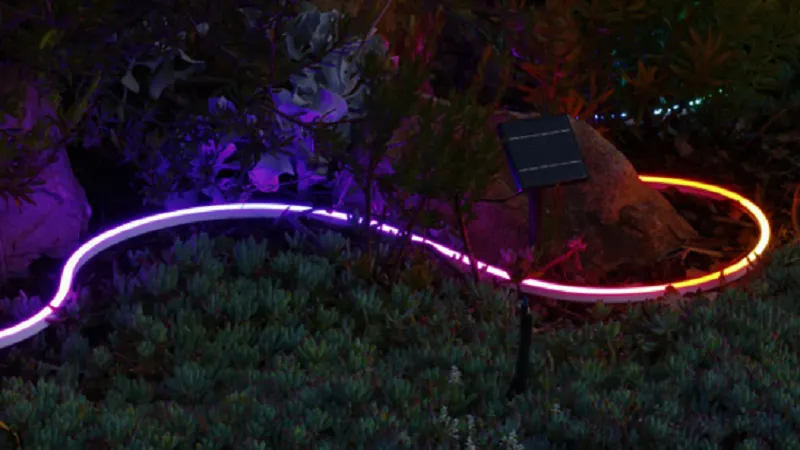
As the global architectural community pivots toward a more sustainable future, every component of the built environment is under scrutiny for its carbon footprint and energy lifecycle. Among these, lighting remains one of the most significant contributors to a building’s operational energy use. In the realm of decorative and accent lighting, the transition from traditional gas-discharge neon to modern solid-state technology is no longer just an aesthetic trend; it is a critical component of environmental strategy.
For procurement managers and developers sourcing wholesale LED strip lights, understanding the sustainability metrics of these systems is essential for achieving green building certifications and long-term economic viability.
Energy Efficiency: A Comparative Thermodynamic Analysis
The most immediate environmental benefit of LED neon flex is its superior luminous efficacy. Traditional glass neon requires high-voltage transformers (ranging from 3,000V to 15,000V) to ionize noble gases within a tube. This process is inherently inefficient, as a significant portion of the electrical energy is converted into heat rather than visible light.
Luminous Efficacy and Wattage Consumption
Modern LED neon strips operate at a fraction of the power. While a traditional neon sign might consume 30 to 60 watts per linear foot, a high-efficiency LED neon strip typically consumes between 3 and 10 watts per meter.
- The Physics of Conversion: LEDs are “cold” light sources. In a professional-grade LED strip, the photon emission process (electroluminescence) is highly optimized. By sourcing wholesale LED strip lights that utilize high-binning SMD chips, developers can achieve efficiencies of over 120 lumens per watt.
- Heat Load Reductions: Because LEDs emit very little infrared radiation (heat), they do not significantly contribute to the “Internal Heat Load” of a building. In large-scale indoor installations, such as shopping malls or hotel lobbies, this translates to a secondary energy saving: the HVAC (Air Conditioning) system does not have to work as hard to counteract the heat generated by the lighting.
Carbon Footprint and Life Cycle Assessment (LCA)
A true sustainability report must look beyond daily energy use to the entire Life Cycle Assessment (LCA) of the product, from raw material extraction to end-of-life disposal.
Manufacturing and Material Sourcing
The production of traditional neon involves lead-glass blowing and the use of liquid mercury, a hazardous heavy metal that poses significant risks during both manufacturing and disposal. LED neon flex, particularly those utilizing silicone encapsulation, offers a much cleaner profile.
- Silicone vs. PVC: From a sustainability standpoint, silicone is the clear winner. Unlike PVC (Polyvinyl Chloride), which releases dioxins and phthalates during production and disposal, silicone is derived from silica (sand). It is chemically inert and does not outgas toxic volatile organic compounds (VOCs) during its operational life.
- Durability as Sustainability: The most sustainable product is the one that doesn’t need to be replaced. With a lifespan of 50,000 to 100,000 hours, LED neon strips outlast traditional neon by a factor of five. This reduces the carbon cost associated with frequent manufacturing, shipping, and installation labor.
Achieving Green Building Certifications: LEED and BREEAM
For commercial developers, the choice of lighting is a key factor in securing prestigious certifications like LEED (Leadership in Energy and Environmental Design) or BREEAM.
LEED v4.1 Credit Integration
Integrating high-quality neon LED systems can contribute to several credit categories:
- Energy and Atmosphere (EA): The primary driver for LEED points. The high efficacy of LED strips helps lower the Lighting Power Density (LPD) below the ASHRAE 90.1 baseline.
- Indoor Environmental Quality (EQ): Since premium LED neon strips are flicker-free and offer high CRI (>90), they contribute to “Quality Views” and “Interior Lighting” credits, which focus on occupant comfort and visual acuity.
- Materials and Resources (MR): Products with Environmental Product Declarations (EPDs) and those that are RoHS compliant (free from hazardous substances like Lead, Mercury, and Cadmium) facilitate the “Building Product Disclosure and Optimization” credits.
Light Pollution and Dark Sky Compliance
Sustainability also extends to the “Nighttime Environment.” Excessive and poorly directed light (light pollution) disrupts local ecosystems and human circadian rhythms.
Precision Optics and Shielding
Traditional glass neon emits light in a 360-degree radius, much of which is wasted as “up-light” into the sky. Modern LED neon flex can be engineered with specific beam angles (e.g., 120-degree “flat” profiles). This allows architects to direct light exactly where it is needed on the facade or the pathway, minimizing light spill.
- CCT and Wildlife: Research shows that high-blue-content light (above 5000K) can be more disruptive to nocturnal wildlife. Sustainability-focused projects now specify “Warm Neon” (2200K – 3000K) for outdoor use. By procuring wholesale LED strip lights with precise CCT control, developers can ensure their projects are “Dark Sky” friendly.
The Economic Dimension: Total Cost of Ownership (TCO)
Environmental sustainability must be paired with economic sustainability. A Total Cost of Ownership analysis reveals that while the initial purchase of high-grade LED neon might be higher than budget options, the ROI (Return on Investment) is rapid.
Operational Cost Comparison Table (Hypothetical 1000m Installation)
| Metric | Traditional Neon | Low-Grade LED Strip | Premium Bulk LED Neon Flex |
| Energy Consumption | ~45,000 kWh/year | ~12,000 kWh/year | ~9,000 kWh/year |
| Maintenance Frequency | High (Gas leaks/Glass breakage) | Medium (Yellowing/Chip failure) | Ultra-Low (5-year warranty) |
| Estimated Lifespan | 8,000 – 12,000 hrs | 15,000 – 20,000 hrs | 50,000+ hrs |
| Disposal Cost | High (Hazardous Waste) | Moderate | Low (Recyclable components) |
By reducing energy bills and eliminating the need for specialized “Neon Technicians” for repairs, the payback period for a premium LED installation is typically under 18 months.
Toxicity and Chemical Safety (RoHS and REACH)
In any commercial or public project, the safety of the materials is paramount.
- Mercury-Free Operation: Unlike fluorescent tubes or traditional neon, LEDs contain no mercury. This simplifies building management as there is no need for hazardous material handling protocols if a strip is damaged.
- Fire Safety and Flame Retardancy: Premium silicone neon flex is designed to be self-extinguishing. In the event of a fire, it does not act as a fuel source and does not release the thick, toxic black smoke associated with burning plastics. This is a critical factor for “Life Safety” codes in high-occupancy buildings like airports and stadiums.
Intelligent Systems and Energy Harvesting
The future of sustainable lighting lies in “Smart Integration.”
- Daylight Harvesting: By connecting LED neon strips to sensors, the brightness can automatically dim during daylight hours, further reducing energy consumption by up to 40%.
- IoT Monitoring: Advanced drivers can now report energy usage in real-time to a Building Management System (BMS), allowing facility managers to identify and rectify inefficiencies instantly.
Conclusion
The argument for LED neon technology is as much about the planet as it is about the “bottom line.” The transition represents a fundamental shift toward “Circular Economy” principles where durability, efficiency, and non-toxic materials are prioritized over disposable, high-energy alternatives.
For the modern developer, the procurement of bulk LED neon flex is a statement of intent. It demonstrates a commitment to building a future that is as bright as it is responsible. By meticulously selecting products that meet high standards for luminous efficacy, chemical safety, and longevity, we can ensure that our architectural landmarks inspire generations without compromising the resources of the next.