
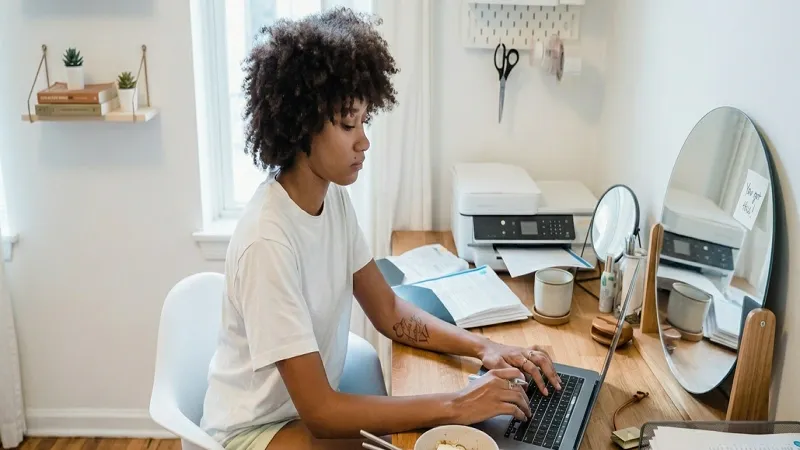
There’s usually a funny moment when a home office starts to become real. At first it’s just a laptop on a table, maybe a spare chair pulled from somewhere else in the house. Nothing serious. Then slowly the small things creep in such as chargers, notebooks, a lamp that doesn’t quite sit right, or cables that never seem to stay where they should. And that’s usually when it clicks: this space needs a bit more thought. Not in a “Pinterest makeover” way. More in a “this is actually used every day” way.
The Desk Problem That Isn’t Really About the Desk
Most people start by overthinking the desk. Size, finish, style, all of that. But honestly, the desk itself usually isn’t the real issue. It’s how it fits into the room.
A big desk in a small space sounds nice until you realise there’s nowhere to move your chair properly. On the other hand, something too small ends up covered in clutter within a week; papers stacked on top of books, a laptop half hanging off the edge, that kind of thing.
It’s rarely about buying “better” furniture. It’s more about choosing something that doesn’t fight the room. And chairs… they always seem fine at first. Until they’re not. That usually takes about three long work calls to figure out.
Cables Don’t Stay Tidy on Their Own
Cables have a habit of turning a clean setup into something messy without much effort. At the beginning, it’s just one charger. Then a second screen gets added. Maybe a printer. And suddenly there’s a whole network of wires sitting behind the desk like it belongs there.
Most of it isn’t even difficult to fix. It just takes a bit of patience. A few clips here, a strip tucked underneath there, and things start to feel under control again. It’s not really about perfection. Just stopping that slow build-up of visual noise that makes the whole room feel heavier than it should.
Storage Always Gets Underestimated
Storage is one of those things that doesn’t seem important until it’s missing. Because real home offices don’t look like showroom setups. They have paperwork that needs to be kept “just in case”, random office supplies, spare cables, half-used notebooks, and things that don’t really belong anywhere else but somehow always end up in the same room.
Open shelves can look nice, but they only work when they’re not overloaded. Closed storage does most of the heavy lifting in the background. It’s where everything slightly messy disappears to when guests walk in unexpectedly. And that’s fine. Not everything needs to be on display.
Light Has a Bigger Impact Than Expected
One of the easiest things to underestimate is lighting. A room can feel completely different depending on the time of day. Morning light makes everything feel fine. Afternoon shadows can make the same space feel cramped and a bit dull.
If there’s a window, it usually makes sense to use it properly rather than work facing away from it. And when natural light isn’t enough, a simple desk lamp often does more than any decorative setup ever will.
Colour plays into this too, but in a quiet way. Soft tones just tend to sit in the background without getting annoying over time. Nothing too loud, nothing trying too hard.
The Parts Nobody Thinks About Still Do the Work
There’s always a hidden layer in any decent home office setup. The bit’s no one sees, but everything depends on. Custom desks, built-in shelves, and fitted storage, they all rely on structure behind the surface. In some cases, something like an aluminium tee section is used inside the build to keep things stable without making the design look heavy or over-engineered. And that’s usually how the best setups work. The strong parts aren’t visible. They just quietly hold everything together.
Switching Off Is the Hardest Part
The furniture and layout matter, sure. But the harder part is psychological. When work lives inside the home, it doesn’t naturally “end” the way it does in an office building. It just sorts of blends into everything else.
That’s why even small boundaries help. Closing a laptop and putting it away. Having a specific corner that counts as the work zone. Even something as simple as turning off the desk light can signal that the day is done. It doesn’t always work perfectly, but it helps more than people expect.
A Good Setup Doesn’t Need Attention
The best home offices usually don’t feel designed. They just feel usable. Nothing gets in the way. Nothing feels like it was chosen just for looks. The space quietly supports whatever needs doing that day and then gets out of the way again. And that’s really the goal. Not a perfect room. Just one that makes daily work a bit easier without demanding constant fixing or thinking about it.